
Back · Barbell
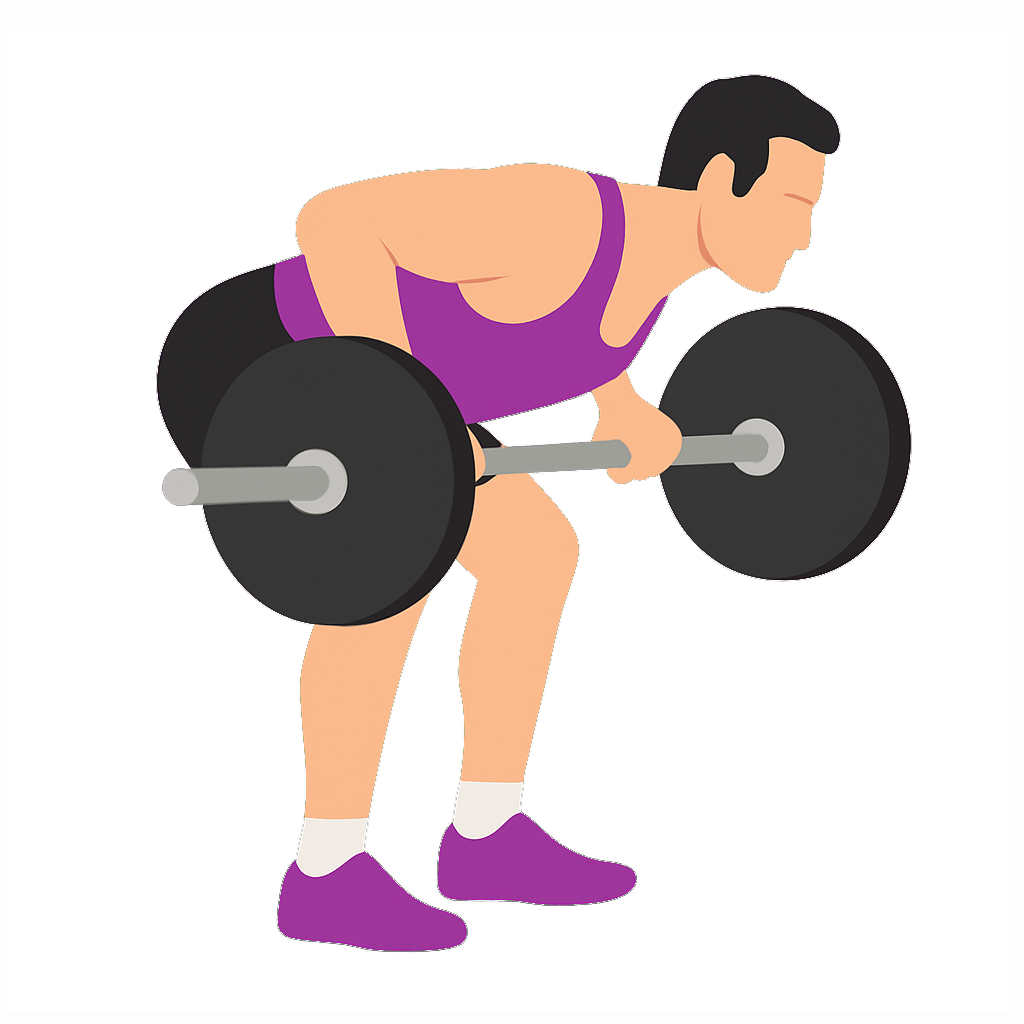
Yates Row
How to do the yates row, the muscles it works, and the mistakes to avoid. Pulled straight from the Kovo app's exercise library.
- Equipment
- Barbell
- Difficulty
- Intermediate
- Logged as
- Weighted reps
- Movement
- Horizontal Row
- Mechanic
- Compound
How to do it
Hinge forward at the hips with a flat back and let the weight hang at arm's length. Pull the weight toward your torso by squeezing your shoulder blades together. Lower the weight back to the starting position.
- 1Use a shoulder-width underhand grip and hinge at about 45 degrees, rowing the bar to your lower chest or upper stomach
- 2Feel your lats, mid-back, and biceps working together as you pull
- 3Keep your elbows close to your body and squeeze your shoulder blades at the top
Common mistakes
- Don't jerk the weight or use momentum; keep the movement smooth
- Avoid rounding your back or standing too upright, which shifts the load
- Don't flare your elbows out or shrug your shoulders excessively
Muscles worked
The yates row mainly works the lats and mid traps, with the biceps, forearms, and rear delts assisting.
- LatsPrimary
- Mid TrapsPrimary
- BicepsSupport
- ForearmsSupport
- Rear DeltsSupport
- Upper TrapsMinor
- Lower TrapsMinor
- Upper AbsMinor
Yates Row strength standards
See how your yates row ranks, from Bronze to Champion. These are the same standards the Kovo app uses to rank your lifts.
 Bronzee1RM135 lb
 Silvere1RM185 lb
 Golde1RM247.5 lb
 Platinume1RM307.5 lb
 Diamonde1RM342.5 lb
 Champione1RM372.5 lb
Find your rank
Enter your best set. We estimate your 1RM and match it to a tier.
Kovo tracks this rank automatically as you train, across every lift, and levels you up as you get stronger.
Kovo programs the yates row for you and tracks it every session.
We build your whole program, drop the right lifts into each workout, and adjust your weights as you get stronger. Free on iOS and Android.
More back exercises
- How to do the archer pull-up
- How to do the resistance band assisted pull-up
- How to do the machine assisted pull-up
- How to do the back extension bench back extension
- How to do the machine back extension
- How to do the back lever
Last reviewed April 2026.