Back · Bodyweight
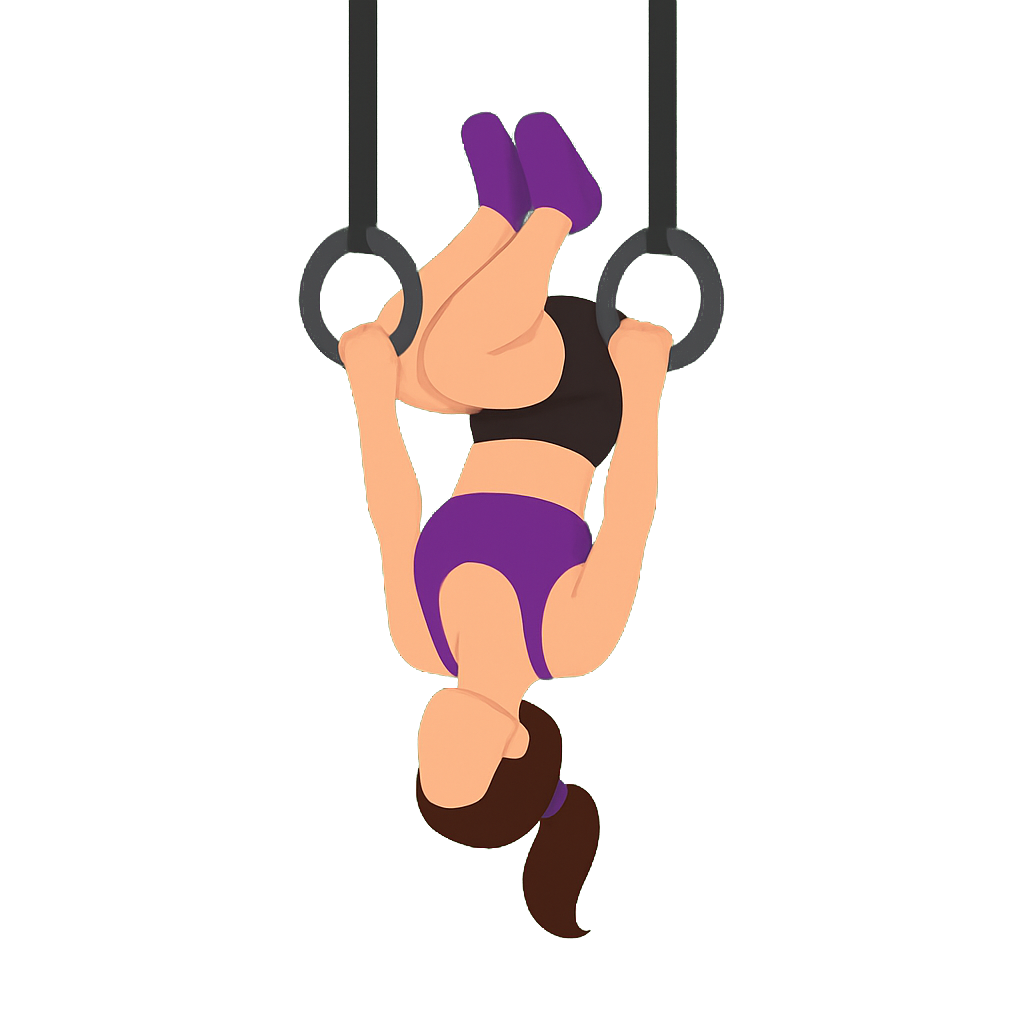
German Hang
How to do the german hang, the muscles it works, and the mistakes to avoid. Pulled straight from the Kovo app's exercise library.
- Equipment
- Bodyweight
- Difficulty
- Advanced
- Logged as
- Weighted reps
- Movement
- Row
- Mechanic
- Mobility
How to do it
Using gymnastic rings or a pull-up bar, start by hanging in a tucked position with your knees close to your chest. Roll backward through the rings and slowly extend your legs downward behind you so your arms and shoulders rotate backward and your body hangs inverted in a deep shoulder stretch. Keep control of the movement and stop when you feel a comfortable stretch in your shoulders and chest. To exit, reverse the movement, tucking your knees and rolling back through to an upright hang.
- 1Feel a deep stretch through your shoulders, chest, and biceps as you hang inverted
- 2Keep tension through your core and glutes to protect your spine
- 3Breathe deeply and ease into the position to feel an opening across the front of your body
Common mistakes
- Avoid collapsing your shoulders; keep them active rather than hanging passively
- Don't relax your grip or let your elbows bend; maintain straight arms
- Avoid bouncing or forcing the range; progress slowly
Muscles worked
The german hang works the lats, biceps, forearms, and upper chest.
- LatsSupport
- BicepsSupport
- ForearmsSupport
- Upper ChestSupport
- Front DeltsSupport
- Mid TrapsMinor
- Lower TrapsMinor
- Upper AbsMinor
- Rear DeltsMinor
Kovo programs the german hang for you and tracks it every session.
We build your whole program, drop the right lifts into each workout, and adjust your weights as you get stronger. Free on iOS and Android.
More back exercises
- How to do the archer pull-up
- How to do the resistance band assisted pull-up
- How to do the machine assisted pull-up
- How to do the back extension bench back extension
- How to do the machine back extension
- How to do the back lever
Last reviewed April 2026.