
Legs · Cable
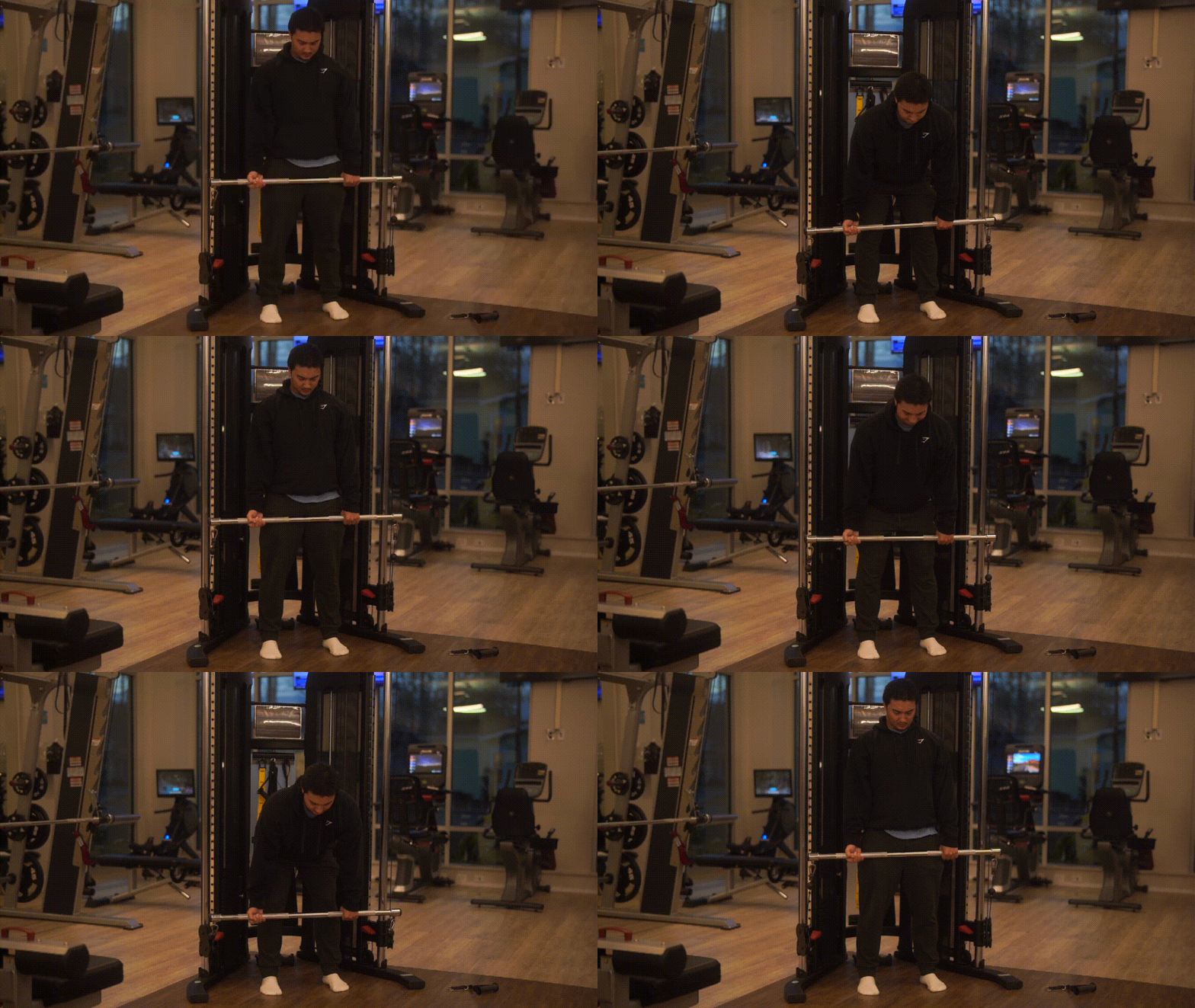
Cable Deadlift
How to do the cable deadlift, the muscles it works, and the mistakes to avoid. Pulled straight from the Kovo app's exercise library.
- Equipment
- Cable
- Difficulty
- Beginner
- Logged as
- Weighted reps
- Movement
- Hinge
- Mechanic
- Compound
How to do it
Stand with feet hip-width apart and the weight over the mid-foot. Hinge at the hips and bend your knees to grip the weight with a flat back. Lift the weight by extending your hips and knees, then lower it back down under control.
- 1Feel your hamstrings and glutes fire as you hinge at the hips against the cable resistance
- 2Keep your back flat and shoulders down to maintain posture
- 3Drive through your heels and extend your hips fully at the top
Common mistakes
- Avoid rounding your back or letting the cable pull you forward
- Don't lock your knees; maintain a slight bend
- Avoid jerking the weight; move smoothly through the range
Muscles worked
The cable deadlift mainly works the glutes, lower back, and hamstrings, with the forearms, quads, upper traps, and upper abs assisting.
- GlutesPrimary
- Lower BackPrimary
- HamstringsPrimary
- ForearmsSupport
- QuadsSupport
- Upper TrapsSupport
- Upper AbsSupport
- CalvesSupport
Cable Deadlift strength standards
See how your cable deadlift ranks, from Bronze to Champion. These are the same standards the Kovo app uses to rank your lifts.
 Bronzee1RM25 lb
 Silvere1RM52.5 lb
 Golde1RM77.5 lb
 Platinume1RM125 lb
 Diamonde1RM195 lb
 Champione1RM250 lb
Find your rank
Enter your best set. We estimate your 1RM and match it to a tier.
Kovo tracks this rank automatically as you train, across every lift, and levels you up as you get stronger.
Kovo programs the cable deadlift for you and tracks it every session.
We build your whole program, drop the right lifts into each workout, and adjust your weights as you get stronger. Free on iOS and Android.
More glutes exercises
- How to do the agility ladder drill
- How to do the airdyne bike
- How to do the arc trainer
- How to do the assault bike
- How to do the medicine ball atlas stone lift
- How to do the b stance hip thrust
Last reviewed April 2026.