Legs · Bodyweight
Soccer
How to do the soccer, the muscles it works, and the mistakes to avoid. Pulled straight from the Kovo app's exercise library.
- Equipment
- Bodyweight
- Difficulty
- Intermediate
- Logged as
- Timed
- Movement
- Gait
- Mechanic
- Isolation
How to do it
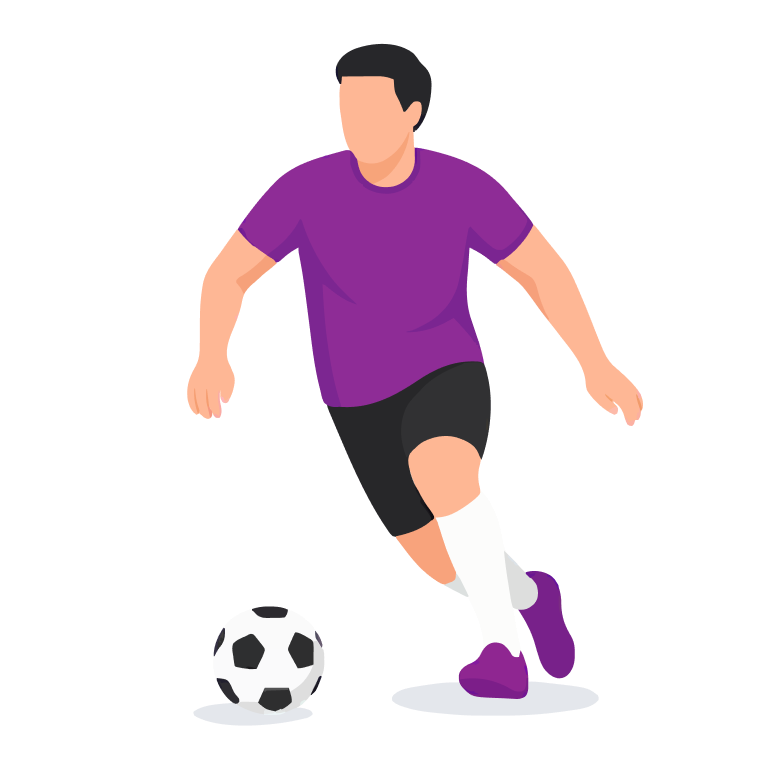
Soccer involves continuous running, agility, balance, and coordination. Expect variable bursts of sprinting, lateral movements, kicking, and short recovery jogs across a wide playing area.
- 1Expect to feel your legs driving you through runs and sprints, with your heart rate elevated and your coordination challenged
- 2You should feel agile and balanced as you change direction, dribble, and pass the ball
- 3Focus on breathing and staying relaxed so the game feels fluid and enjoyable
Common mistakes
- Don't ignore signs of fatigue or pain, listen to your body and rest if needed
- Avoid playing without a proper warm-up or adequate hydration
- Don't perform risky tackles or movements that could compromise your safety or that of others
Muscles worked
The soccer works the biceps, triceps, mid chest, and lats.
- BicepsSupport
- TricepsSupport
- Mid ChestSupport
- LatsSupport
- Lower BackSupport
- Upper AbsSupport
- Lower AbsSupport
- QuadsSupport
- GlutesSupport
- HamstringsSupport
- CalvesSupport
- Side DeltsSupport
- ForearmsSupport
- Upper TrapsSupport
- ObliquesSupport
Kovo programs the soccer for you and tracks it every session.
We build your whole program, drop the right lifts into each workout, and adjust your weights as you get stronger. Free on iOS and Android.
More quads exercises
- How to do the resistance band squat
- How to do the resistance band squat to press
- How to do the resistance band thruster
- How to do the resistance band squat walk
- How to do the barbell squat
- How to do the barbell bulgarian split squat
Last reviewed April 2026.